
Grant County Civil Docket Searches
For Grant County Circuit Court civil dockets, start with Search ARCourts. Pick Participants mode to search a person or organization. Pick Cases mode when you have a case description or a full civil number. Either way, filter with County Name = GRANT and Court Name = GRANT CIRCUIT. Grant Circuit civil cases carry numbers in the 27CV-YY-N format. A complete number pulled from a notice or a filed paper cuts through confusion fast.
The State District Court path works differently. Small claims belong to the Grant County District Court Clerk. Limited contract disputes and personal-property disputes do too. The public portal’s court filter offers no Grant district option. For those court records, call 870-942-3464 or use the counter or mail route instead.
- Identify the court from the complaint, notice, or case number before starting the civil docket search.
- For Circuit Court, select GRANT and GRANT CIRCUIT in Search ARCourts.
- Search by a full 27CV number, a party name, or an organization in the case caption.
- Verify the filing date, case type, status, and participant roles before reading entries.
- Use a WEB link for an available public image, or ask the filing clerk for a plain or certified copy.
Grant County Civil Docket Walkthrough
The official Grant civil interface splits a basic case summary from participants and the time-ordered Docket Entries. A result can name a plaintiff, defendant, counsel, filing date, case type, trial type, and status. The docket table runs on Filing Date, Description, Docket Detail, Name, and Documents columns. A WEB marker can link to a public filing image. Many payment or closure rows carry none.
The official Grant civil interface shows these fields and entry types. It displays them in a live case view.
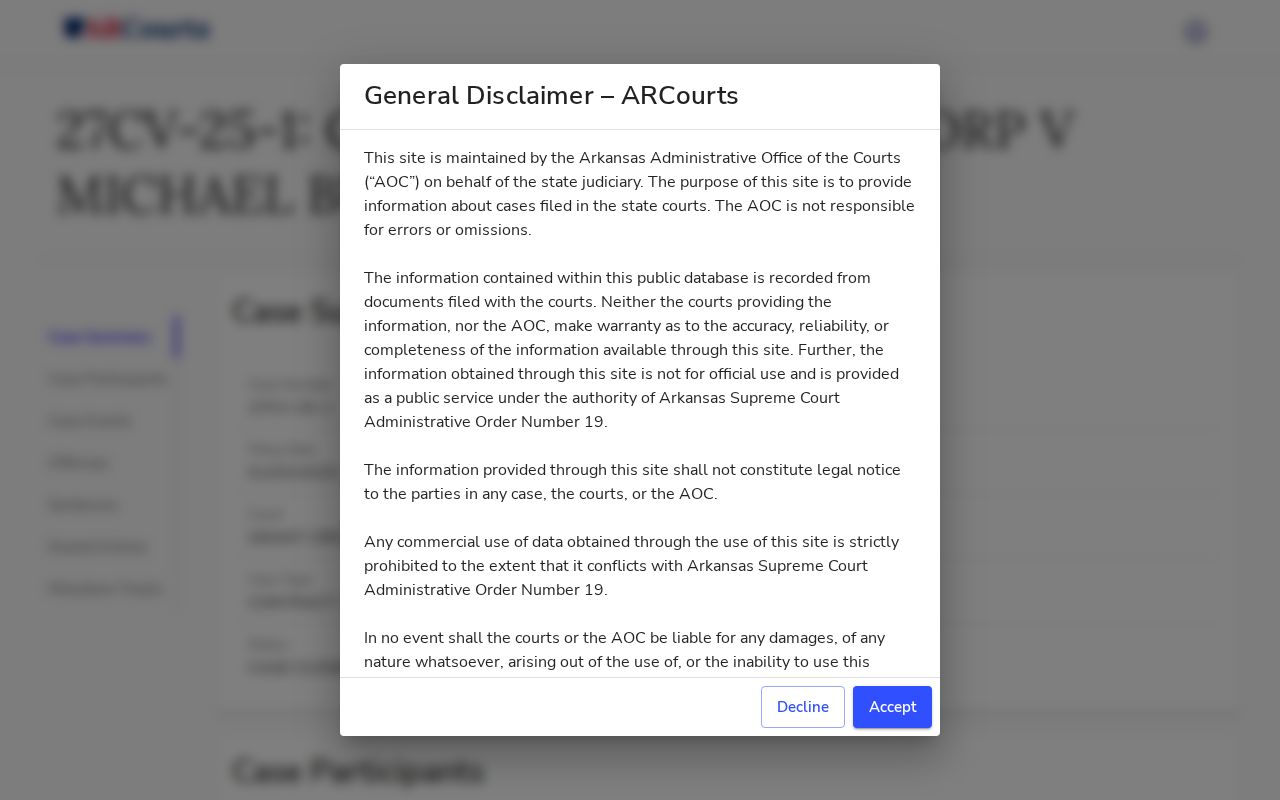
Read in a careful order. Check the case header first, then match each party to a role, and follow every filing through the last displayed enforcement entry.
Civil Dockets: What They Show
A Grant County civil docket can show the AOC civil coversheet, complaint or petition, summons fees, issuance and service, motions, affidavits, disposition sheets, judgments, and post-judgment collection. Each line means one thing: an event or paper entered the case history. It rarely spells out the full legal basis or every exhibit. A linked WEB document may answer the next question. An unlinked entry means a request to the clerk instead.
| Case Number | A Circuit civil number such as 27CV-25-1, with county, case-type, year, and sequence parts. |
|---|---|
| Case Summary | Court, filing date, type, trial type, and current administrative status. |
| Participants | Plaintiff, defendant, judge, and attorneys identified by their case roles. |
| Service Entries | Summons issued, return or affidavit, and service status as separately filed events. |
| Motions and Orders | A party request and the court’s response, which must not be treated as the same action. |
| Judgment Activity | Disposition, default judgment, modified order, and later collection or disbursement entries. |
The docket gives you sequence. Each linked or clerk-held paper holds the substance behind its short entry label.
Grant County Civil Docket Service Entries
Civil service creates a useful sequence in a Grant County docket. A complaint or petition starts the case. "Summons issued" means the clerk produced process, not that the other side received it. A later return or affidavit of service is the entry that addresses delivery. Keep those steps separate. Track whether the case moved toward an answer, motion, hearing, or default request with that separation in mind.
- Complaint or petition
- The paper that asks the court to open a civil matter and grant relief.
- Summons issued
- The clerk created formal process for service.
- Summons served
- A return or affidavit reports that service was made.
- Motion
- A party’s request for a court ruling.
- Order
- The judge’s direction or decision, distinct from the request.
Arkansas offers a searchable source for official court forms. The Arkansas Judiciary forms library helps decode form names. It is not a Grant County case search, and it cannot show whether a form was filed.
What Cases Fill the Civil Docket
Grant County Circuit Court holds general jurisdiction with subject divisions for civil, domestic-relations, probate, juvenile, and criminal matters. Statewide civil search types include contract, automobile tort, civil-other, divorce, order of protection, probate, guardianship, small claim, and eviction labels. The court and case type still control the correct docket route and its public-access limits.
| Grant County route | Matters covered | Where to start |
|---|---|---|
| Circuit Court | General civil disputes, domestic relations, and probate matters | Search ARCourts, then Circuit Clerk |
| State District Court | Contracts and personal-property claims below $25,000 | District Court Clerk |
| Small claims | Claims below $5,000 | District Court Clerk |
The Arkansas Judiciary district-court overview covers the lower court's limited civil jurisdiction in the state's own words.
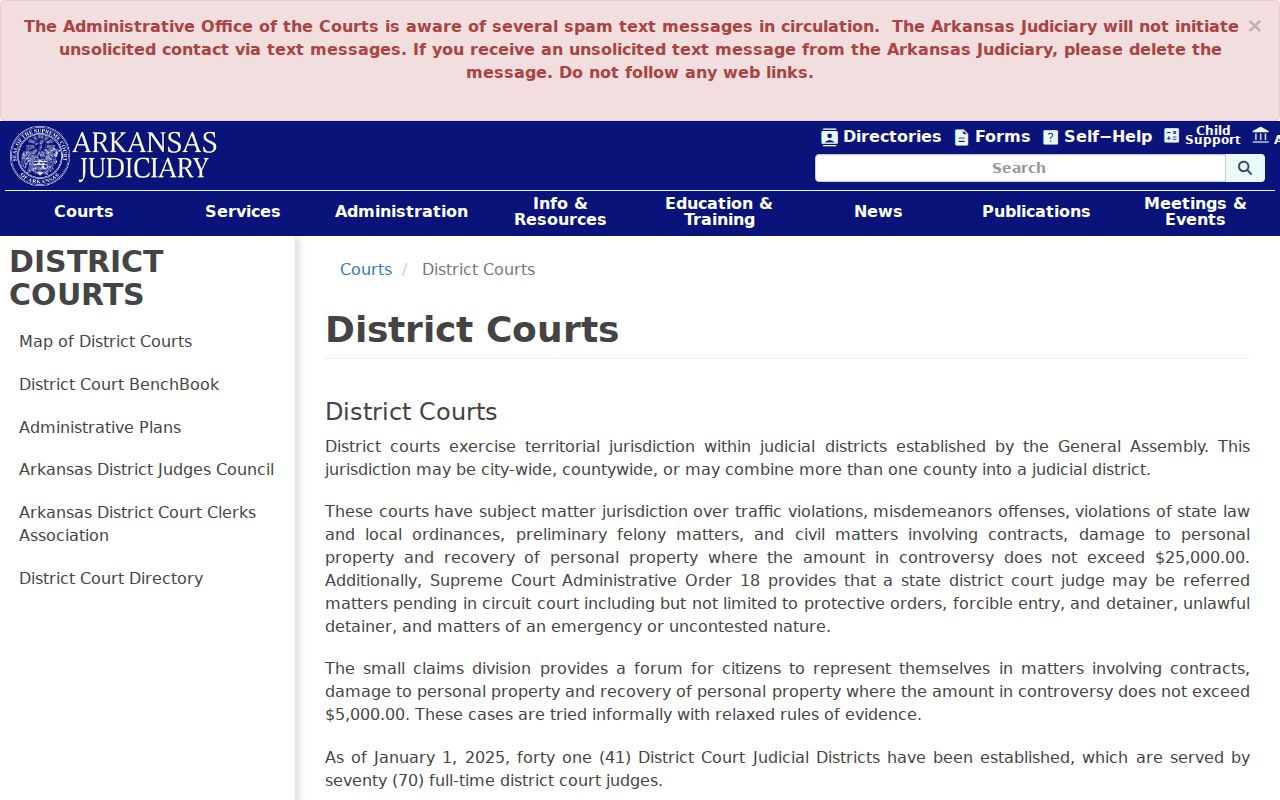
That jurisdiction line explains many failed searches. A Grant County civil search returns nothing when the reader picks Circuit Court for a small claim held by the separate district clerk.
Grant County Civil Dockets After Closure
CASE CLOSED does not always mark the last entry. A Grant County civil docket can show post-judgment activity, such as a writ of garnishment, garnishee answer, and disbursement order, after closure. That pattern is common to enforcement: the dispute may be resolved while collection steps continue in the same chronological record.
The default path also needs care. A default-judgment motion is a party's request. The signed default judgment is the court's action. A modified judgment, decree, or order can then change disposition data. Read through the final listed entry and open each public WEB image that bears on the outcome.
Closure is not a stopping cue. Grant County readers should continue through all later docket entries for garnishment, payment, modification, or disbursement activity.
Hearings on the Civil Docket
Circuit Court settings appear in Case Events. Docket Entries record the notices, motions, orders, and resets. Read the event's date, time, room, location, judge, and setting type. Then compare the entry list for a later continuance or revised order. A motion for continuance asks the court to move the hearing. Only an order or updated event confirms the change.
District civil and small-claims trials are listed locally for the second Wednesday. The administrative plan supplies a session time, while the county page describes sessions differently. Follow the case notice. Confirm with the District Court Clerk rather than treating either source as a universal time. The Grant County court schedule gives the full date-confirmation chain.
Note: The county posts no standalone daily civil calendar, Zoom rule, or docket-specific closure feed.
Grant County Civil Docket eFlex Divide
Grant County Circuit Court runs on mandatory e-filing for the civil matters it covers. Arkansas eFlex is where lawyers and parties send their documents in. Search ARCourts is where the public reads what a case allows online. Keep the two straight from the start. An eFlex account, with its registration, training, and login, grants no wider Grant County civil docket search. Anyone else has the same reach. The official Arkansas eFlex login page shows that split plainly. The submission side is built around accounts and never doubles as a public docket view.
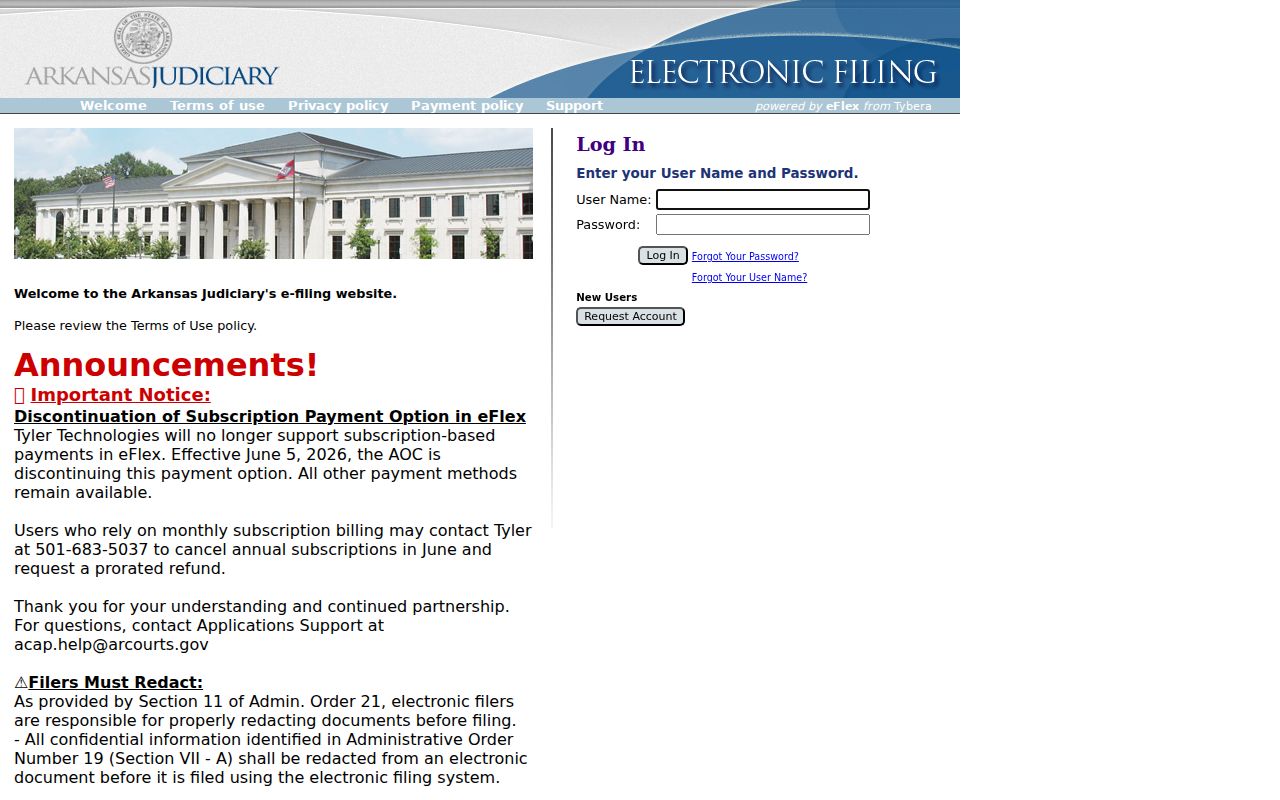
Timing is where the divide bites. Submitting a filing and seeing its public docket entry are related steps, not one and the same screen or access right.
Who Can See Civil Dockets
Administrative Order 19 draws the Arkansas access map. The public Search ARCourts pages only display what has been cleared for online release. Social Security numbers and account data never appear there. So do sealed material and internal court work. Anything a statute or court order makes confidential stays off too. Family-related matters can hold juvenile or adoption material governed by special laws. A copy fee buys paper, not permission. Paying the charge does not unlock protected content.
Sometimes a redacted public copy sits beside a sealed full version of the same filing. One restricted document does not always hide the entire Grant County civil docket. When something you want is unavailable, ask the Grant County & Circuit Clerk which restriction controls. The statewide compiled-information request covers AOC-held datasets. It does not fetch an ordinary certified copy of one local judgment.
Arkansas access boundary: Administrative Order 19 resources explain public access, redaction, and the special compiled-data request path.
Arkansas Code § 9-27-309 protects juvenile records, while the Revised Uniform Adoption Act closes adoption records under its stated rules.
Search ARCourts is informational and not the official court record or legal notice.
Grant County Civil Docket System Layers
Specialty-court software is easy to mistake for civil public access. Be careful here. SCALES is an internal management tool that specialty courts use for referrals and assessments. It takes credentials. It is not a public Grant County docket of any kind. The underlying case, if it is available at all, stays in the ordinary Circuit Court record. Administrative Order 19 governs that record. The official SCALES description confirms the system's restricted court-management role and nothing more.
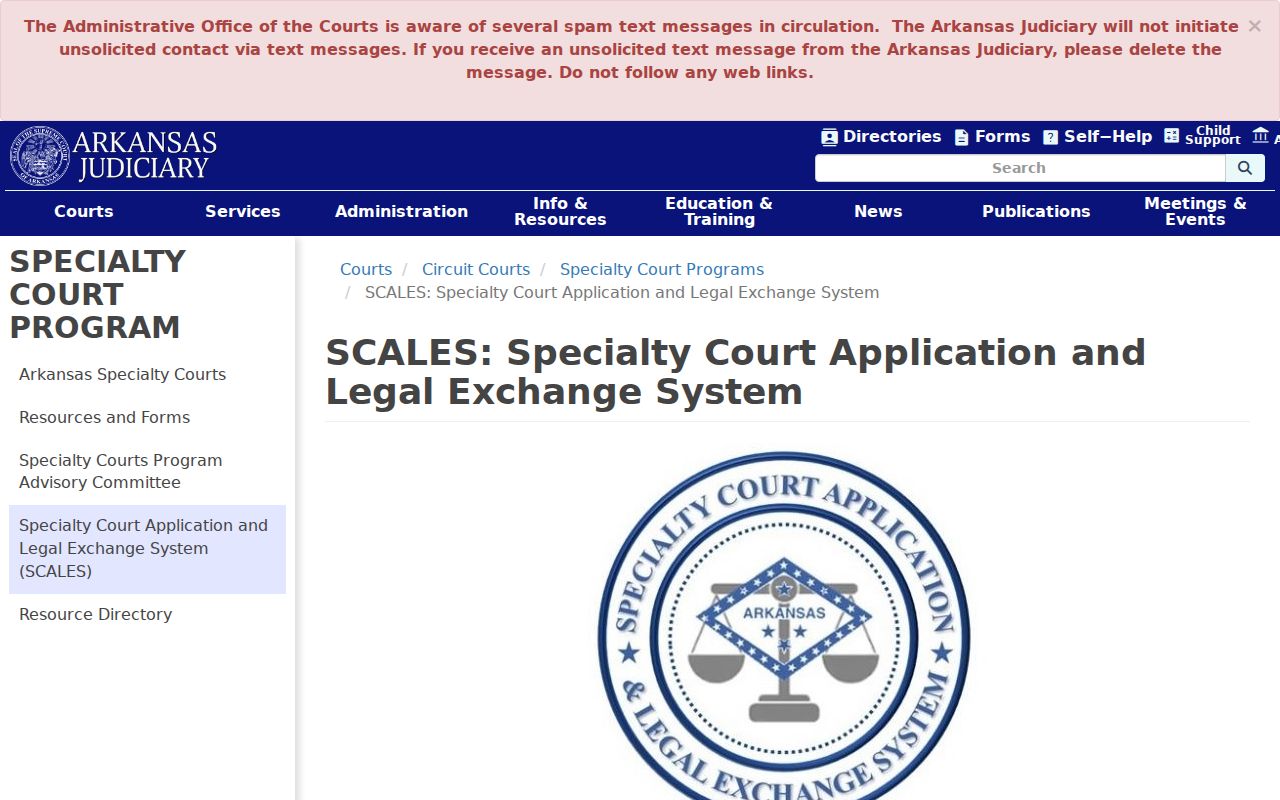
Put the layers side by side and one Grant County rule stands out. Filing tools, internal program systems, public docket views, and clerk-certified case papers are four different things.
Need an official civil judgment? Write down the case number, the exact entry description, and the filing date first. Then call the Circuit Clerk at 870-942-2631. The office lists $0.50 for copies and $5.00 for certified copies. The units and any add-on method are not published. Before you send a request, ask for the quoted total. Also get the delivery method, how to pay, and how long retrieval takes.